Dulwich Man And Van in Dulwich

Our man and van service in Dulwich is set up for practical local moves, careful item transport and straightforward collection jobs that need a flexible vehicle and a helpful team. We focus on moving household items, a few rooms’ worth of furniture, single bulky pieces and mixed loads with the same attention to access, packing and safe loading. If you need a reliable way to shift belongings across town or a little further, we can organise a move that suits the job rather than forcing it into a one-size-fits-all approach.
We also support customers who want a simple alternative to hiring a van themselves. That can include lifting, carrying, protecting furniture, planning the load and setting the day up so the transport side runs smoothly. Tell us what needs moving, where it is going and any awkward access, and we can prepare a quotation based on the details you provide. If you already know the volume, that helps; if not, a clear description is usually enough to begin.
For fuller removals, the service can be arranged around the size of the property, the number of large items and the handling needed for fragile belongings. The aim is to keep the move manageable, with sensible timing and a clear scope. pricing and quotes is the best place to start if you want to compare what the job may involve before you decide how much help you need.
House Moves and General Domestic Transport
Domestic moving often needs more than just a van. It needs a team that can judge whether the day is about a sofa and a wardrobe, or whether several rooms’ worth of furniture, boxes and appliances need to be carried in stages. Our house-moving work covers those common scenarios, from smaller flats to fuller family homes, with the emphasis on keeping items secure and the loading order sensible. Where needed, we can plan around stairs, tight hallways and shared entrances.
We also handle straightforward relocation jobs that sit between a light carry and a full removals package. That might mean moving selected furniture into storage, taking items to a new address, or transporting belongings after sorting and downsizing. The important part is that the service remains adaptable. If you only need help with the heavier pieces, that can be arranged; if the entire move needs to be managed, the scope can be broadened. home moves gives a more focused view of domestic moving support.
Useful preparation does not need to be complicated. A short inventory, a note of access restrictions and an idea of which pieces need extra care can make the quotation more accurate and the move easier to organise. It also helps to identify items that must be dismantled or wrapped before they travel. For broader household support, house removals is a relevant page to review when you are weighing up the scale of the job.
Loading, Carrying and Vehicle Options

A man and van move depends on good handling as much as the vehicle itself. Loading should be balanced so that heavier items sit securely, lighter boxes are not crushed and fragile belongings are separated where necessary. We work with practical packing order and careful placement, which matters when you have awkward furniture, framed items, white goods or mixed household contents. The aim is not simply to get everything into the van, but to get it there in a way that reduces avoidable movement in transit.
Different jobs call for different vehicle and load choices. Some customers need a compact move for a single room or a few large pieces, while others need a larger removal van and more time for loading. Where the job allows, using the right size of vehicle can make the day more efficient and less cluttered. If you are comparing options, moving van can help you think through the transport side before you request a quotation.
Three simple points often help people decide what to book: the amount of furniture, whether items need lifting from upper floors, and whether the delivery address has difficult access or parking limits. These are not the only factors, but they usually shape the plan. When the information is clear, the service can be matched to the move more accurately and with fewer surprises on the day.
Packing Help and Protective Handling
Some moves are made easier by light packing support rather than a full packing service. That can include wrapping breakable items, grouping loose belongings into boxes, protecting furniture corners and separating items that need to stay upright. The purpose is to reduce friction on moving day, especially where the load contains mixed household goods rather than a handful of large objects. Even a modest amount of preparation can make the process more efficient.
If you want help with the practical side of preparing belongings, we can discuss which items are best left assembled, which should be dismantled and what needs extra padding or wrapping. This is especially useful for pieces with glass, polished surfaces or detachable parts. For people comparing support levels, packing and unpacking services is a useful page because it reflects the sort of assistance that can sit alongside a man and van booking.
It is often sensible to keep essential documents, valuables and everyday items separate from the main load, so they stay with you. That is not a rule for every customer, but it is a practical way to keep control of things you may want quickly after arrival. If you are unsure how to divide the load, we can talk through the options before the quotation is finalised.
Furniture, Single Items and Smaller Collections
Not every booking is a full move. Many people need a team for one or two bulky items, such as a sofa, bed frame, dining table or appliance. Others want a few pieces collected from a seller, storage unit or family home and delivered to another address. A man and van arrangement is well suited to that type of work because it can be scaled to the volume without adding unnecessary complexity. The focus stays on safe handling and efficient transport.
When furniture is the main concern, the details matter: width, weight, whether something can be dismantled, and whether it has to pass through narrow access points. We can use that information to shape the move and decide if extra care or additional hands are needed. For customers who are arranging a pickup rather than a whole-house move, furniture pick-up is a helpful internal page to consider alongside the main service.
Collections can also involve mixed items rather than one named piece. A job might include a bed, boxes and a small appliance, or a couple of chairs with stored household items. In those cases, the load still benefits from planned stacking and sensible separation. Clear item descriptions tend to make the process smoother, particularly if any objects are fragile, awkward or difficult to carry alone.
Commercial and Office Transport

The same flexible moving approach can work for smaller business jobs as well as domestic ones. A man and van service is often useful for office furniture, boxed files, compact equipment and general relocation work where the job is too small for a large-scale removals operation but still needs proper handling. Commercial transport benefits from clear planning because workplaces often have limited access windows, shared entrances and items that must be moved without disruption.
We can support office tasks that involve desks, chairs, storage units and neatly boxed contents, as long as the scope is suitable for a van-based move. If the job involves a full workplace relocation, a more structured plan may be needed; if it is a smaller transfer of equipment or furniture, the service can remain simple and efficient. office removals is the page to review if you want to see how that side of the work is presented.
Some customers also need help moving stock, surplus furniture or items being cleared from a business premises. That can require careful sorting so that useful items, reusable materials and general waste are handled differently. Where the work becomes more substantial, it is sensible to describe the job clearly from the outset so the quotation reflects both the physical effort and the time involved.
Service Scope, Planning and Price Factors
Prices for a man and van booking usually depend on practical factors rather than fixed assumptions. Distance, volume, access, loading time and the number of hands needed can all affect the final quotation. A short ground-floor pickup is different from a multi-floor move with long carrying distances, and the quotation should reflect that difference. If you are trying to compare options, it helps to think in terms of the actual work rather than only the postcode or the vehicle size.
A good quotation starts with a few clear facts: what is moving, where it is going and whether there are stairs, parking limits or dismantling needs. Photographs can help, but they are not always essential if you can describe the items well. If you have dates in mind, mention them too, as that can affect how the job is planned. For commercial enquiries, commercial moves is a sensible page when your load belongs to a business rather than a household.
We keep the process straightforward: tell us about the job, ask any questions you have and then decide whether a van-based move is the right fit. Request a quotation when you are ready, or use the service pages to narrow down the kind of help you need. A well-scoped booking is usually easier to organise and easier to complete within the expected time.
About Dulwich
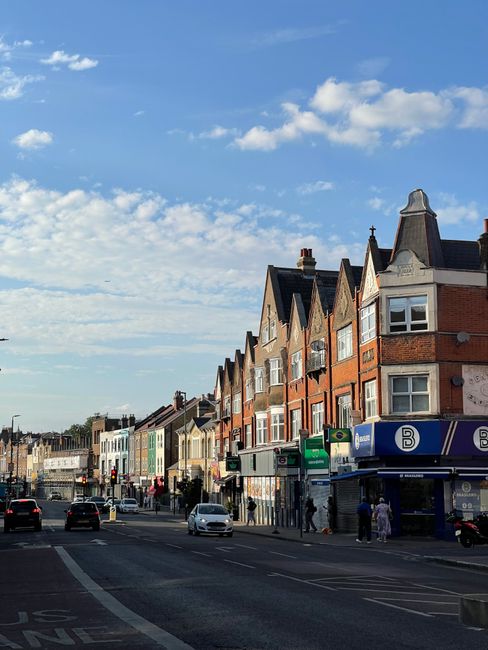
Dulwich is a district in south London associated with a long history of planned landscapes, education and residential streets set around village-like centres. The area is closely linked with Dulwich College, founded in the early seventeenth century, and with the enduring presence of Dulwich Picture Gallery, which opened in 1817 as the first purpose-built public art gallery in England. The district is often divided into Dulwich Village, East Dulwich and West Dulwich, each with its own streetscape and character, while remaining part of a wider urban fabric. College Road and nearby routes reflect that mix of institutional, residential and local-parade uses. The area includes mature trees, period houses and a network of quieter roads that feel distinct from the larger transport corridors nearby. There are also open spaces such as Dulwich Park, a much-loved landscape with broad paths, water features and views that have made it a recognisable part of the neighbourhood. The Horniman Museum and Gardens lie a little further afield but remain part of the cultural geography commonly associated with south-east London, while the local area itself is also known for arts, independent shops and community facilities. Dulwich Woods and the wider green edges around Sydenham Hill and Belair Park add to the sense of varied topography and open land within a densely built city. That combination of historic architecture, civic institutions, greenery and residential calm gives Dulwich a distinct identity within London’s south-eastern districts.
Household and Specialist Moving Decisions

Choosing the right moving support usually means thinking about what makes the job difficult, not only how many boxes there are. Heavy furniture may need two people to carry safely, while delicate items may need extra wrapping and a steadier loading pattern. Some customers want help with one specific part of the move, such as taking a sofa upstairs or moving a bed between homes; others want the whole domestic transfer managed from collection to delivery. The service can be adjusted to suit either pattern.
If the move includes items that cannot be tipped, squeezed or stacked freely, that should be mentioned early. Pianos, glass-fronted cabinets, large mirrors and awkward appliances all benefit from careful handling decisions. Where it is helpful, the move can be organised so that those pieces are loaded first or last depending on the route and the available space. house movers is useful if you are comparing domestic moving options with a more general removals service.
There are also jobs that sit between household and specialist transport. For example, someone may need a mixture of furniture, boxes and a few valuable items taken to storage, a family address or a new flat. In those cases, the move is often better described item by item than as a vague “few bits”. That helps the quotation reflect the work accurately and can make the loading order much easier to plan.
Collection, Disposal and Reuse-Related Moves
Not every transport job is about relocation alone. Some customers need items collected because they are being replaced, passed on, stored or prepared for reuse. A man and van can be suitable for those mixed-purpose loads when the items are still to be carried carefully and transported in a sensible order. The work might include a few large pieces, boxed contents or furniture being moved out of the way for a refurbishment or change of use.
Where the movement relates to clearing space, it is still important to separate what is going where. A collection job for reuse is different from a removal job for disposal, and a quotation should reflect that difference. If you want to compare that kind of work with other moving options, removals provides a broad overview, while the more specific service pages help narrow the scope. Keep items grouped if possible and note anything that needs careful lifting.
Some jobs also involve a step beyond the immediate move, such as relocating furniture before a sale, moving pieces ready for storage or transporting items after a household has been reorganised. Those are all practical man and van tasks when they are described clearly. They benefit from plain instructions, sensible timing and a delivery point that is ready to receive the load.
Preparing for a Move in Practice
When you are getting ready to book, the most useful information is usually simple and factual. A short list of the main items, an estimate of how many boxes there are and any notes about access can save time later. If certain pieces need dismantling or if parking is restricted, mention that at the same time. The aim is not to overcomplicate the process, but to make the quotation relevant to the actual job.
It can also help to decide in advance whether you want assistance with loading only, unloading only or both parts of the move. That distinction matters because the work is different in each case. removal services is a useful page when you want to see how the broader moving offer is framed, especially if your booking may extend beyond a straightforward point-to-point transport job.
Once the basic details are clear, the rest becomes easier to arrange. The move can be shaped around the volume, the route and any delicate pieces, without introducing unnecessary extras. Contact us to request a quotation if you are ready to outline the job, or keep reading the service pages to decide what level of help suits you best.
Further Moving Support and Final Details

Some customers begin with a small man and van booking and later discover they need a broader removals package. Others find the opposite: what seemed like a big job can often be managed neatly with a van, a careful loading plan and a measured amount of labour. The service is therefore best understood as flexible moving support rather than a rigid category. That flexibility is useful when household contents, business items or single heavy pieces all need moving under one arrangement.
If you are comparing related options, movers offers another route into the wider moving range, while removal company and removal companies may help if you are still deciding which style of provider best suits your move. The most useful choice is the one that matches the scope of the job, the amount of lifting involved and the level of assistance you want on the day. Keep the description direct, and the quotation process tends to be more useful.
For the quickest start, send the main details of the move and ask for a quotation. If you prefer to compare the service structure first, review the relevant pages and then come back with the practical facts. request a quotation when you are ready and we can help shape the move around the items, the access and the destination.